Government Impersonation Scams
Learn how scammers impersonate government agencies and pressure victims to send money or personal information.
Read FTC GuidanceVerify before you pay, reply, click, or share personal information. Scammers may impersonate government agencies, municipal departments, vendors, banks, utilities, or trusted organizations to request payments, personal information, banking information, or login credentials.
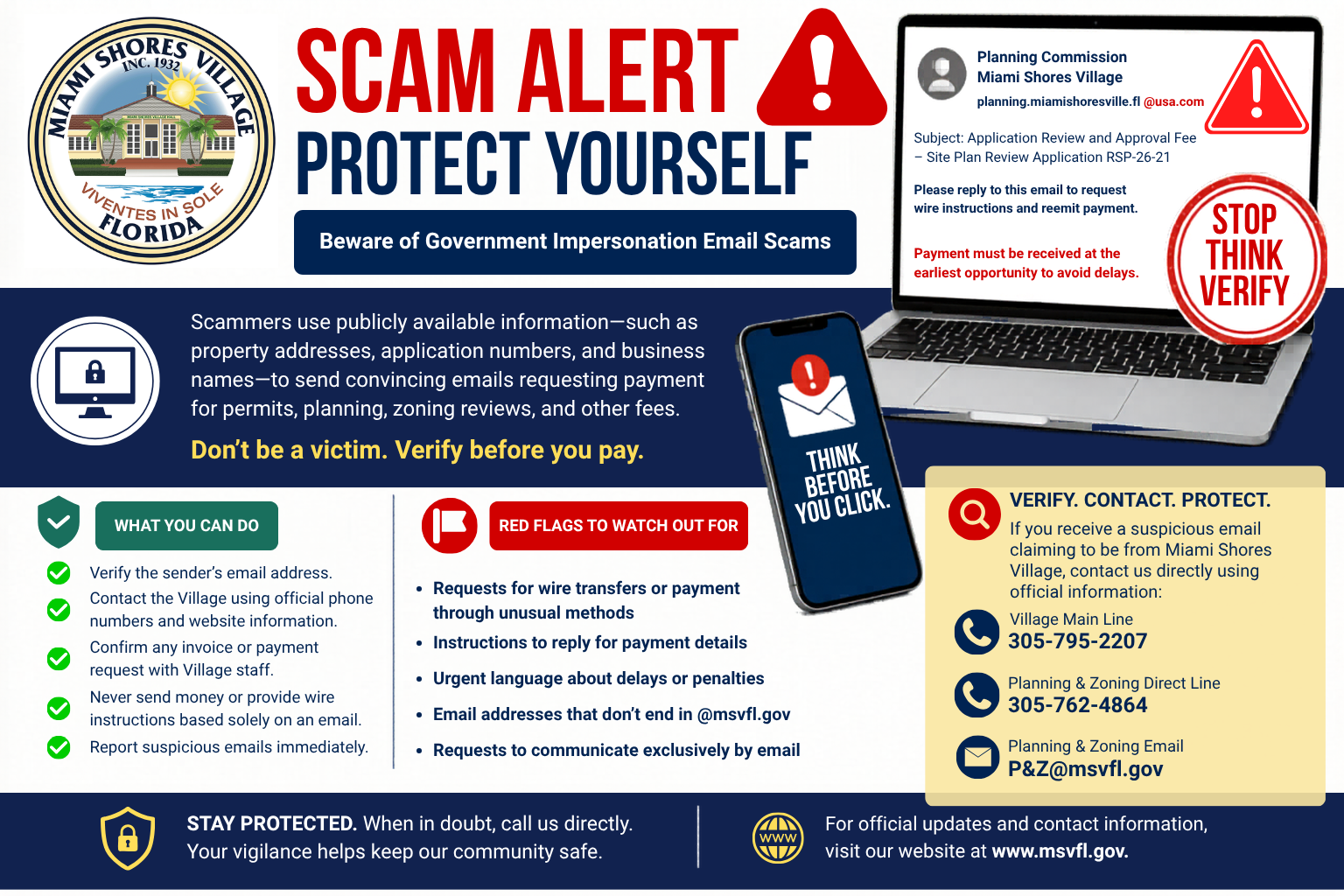
Miami Shores Village has been made aware of fraudulent emails impersonating Village officials and requesting payment for Planning and Zoning reviews, application approvals, permit-related fees, or other Village charges.
These scams may use publicly available information, such as property addresses, business names, application numbers, or project details, to make the message appear legitimate.
Miami Shores Village does not request wire-transfer payments or wire instructions by email for Planning and Zoning fees.
Before replying to any suspicious email or sending any payment, contact the Village directly using official contact information. Do not rely on phone numbers, email addresses, links, or payment instructions included in a suspicious message.
Residents, property owners, businesses, contractors, and applicants should carefully review any unexpected request that appears to come from a Village department, especially if the message asks for money, wire instructions, banking information, passwords, verification codes, personal information, or urgent action.
Official Village emails generally come from an @msvfl.gov email address. However, email addresses, sender names, phone numbers, links, and websites can be spoofed or imitated. Always verify directly with the Village before replying, clicking links, or sending payment.
Department-specific payment links or instructions will be provided only when needed for specific Village transactions. If you are unsure whether a payment request is legitimate, call or email the Village directly before taking action.
If you receive an unexpected request for payment, personal information, or sensitive information that appears to come from Miami Shores Village, contact the Village directly before replying or sending anything.
Messages claiming you must pay a Village fee, invoice, permit charge, approval fee, or penalty immediately.
Scammers pretending to be government employees or agencies to demand money or personal information.
Fake requests related to permits, inspections, zoning reviews, planning applications, or development approvals.
Emails designed to trick you into clicking links, opening attachments, or entering login credentials.
Fraudulent text messages claiming unpaid tolls, missed payments, delivery issues, account problems, or urgent notices.
Requests to send money to a new account, wire funds, or pay an invoice that appears legitimate but is fraudulent.
Threats that a service will be disconnected unless immediate payment is made.
Requests for payment by gift card, cryptocurrency, payment app, cash transfer, or other unusual methods.
Calls, pop-ups, or emails claiming your device is infected and asking for remote access or payment.
For Code Compliance complaints, Florida law generally requires the complainant’s name and address before a code investigation may be initiated. This requirement does not apply if the reported issue appears to present an imminent threat to public health, safety, or welfare, or imminent destruction of habitat or sensitive resources.
This notice applies to Code Compliance complaints. Other Village services, applications, registrations, permits, payments, or requests may require different information depending on the transaction or service.
Information submitted to Miami Shores Village may be subject to Florida Public Records Law. Records received or maintained by the Village may be subject to public inspection and copying unless exempt or confidential under applicable law.
The following resources are provided by official government agencies to help residents recognize scams, fraud, phishing, spoofing, and cybercrime.
Learn how scammers impersonate government agencies and pressure victims to send money or personal information.
Read FTC GuidanceReview examples of imposter scams and learn how to stop, verify, and report suspicious activity.
View FTC ResourcesLearn how scammers disguise email addresses, sender names, phone numbers, and website links.
Read FBI GuidanceLearn about fake invoice, wire-transfer, and payment-request scams that appear to come from trusted sources.
Learn About BEC ScamsCybersecurity videos and public resources about protecting yourself, your family, and your business online.
View CISA ResourcesIf you believe you were the victim of fraud or cybercrime, use official federal reporting channels.
Report to the FTC